
"Natural" and "regrow" are two words that get abused relentlessly in the hair loss industry. So let's start with what's honest: natural approaches can slow recession, thicken miniaturized hairs, and in some cases produce modest regrowth at the hairline. They cannot regrow a fully bald area, and they are less potent than pharmaceutical options. What they offer is a legitimate first-line approach with a dramatically better safety profile.
What "Natural Regrowth" Actually Means
When we talk about regrowing a receding hairline naturally, we're talking about:
- Reversing miniaturization in follicles that are weakened but still active
- Extending the anagen (growth) phase so hairs grow longer and thicker before cycling
- Reducing DHT's effect on follicles through natural 5-alpha-reductase inhibition
We are NOT talking about resurrecting dead follicles, regrowing a completely bald temple, or achieving results comparable to finasteride. If someone promises natural complete regrowth, they're selling something that doesn't exist.
The Evidence-Based Natural Protocol

Based on published clinical research, here's a natural regrowth protocol ordered by strength of evidence:
Step 1: Oral DHT Management (Daily)
Saw palmetto (320mg/day, standardized extract) is the most studied natural 5-alpha-reductase inhibitor. A 2012 randomized trial showed 38% of men experienced measurable improvement over 24 months. That's roughly half the efficacy of finasteride, but with zero documented sexual side effects.
Beta-sitosterol (60 to 130mg/day) competes with DHT at the androgen receptor. Works synergistically with saw palmetto. The combination has stronger evidence than either compound alone.
A formulation that combines these with supporting nutrients (zinc, B6, biotin) in clinically studied ratios is more practical than sourcing individual supplements. Procerin is one such formulation with an IRB-approved study behind the specific combination, which matters because most supplement companies test nothing.
Step 2: Topical DHT Management (Daily)
Applying DHT-blocking compounds directly to the hairline puts active ingredients where they're needed most. Procerin's XT Topical Activator delivers saw palmetto and other compounds directly to the scalp. Ketoconazole shampoo (1 to 2%, used 2 to 4 times weekly) adds a topical anti-androgenic layer with solid evidence from dermatological research.
For more on how DHT blocker shampoos work and which ingredients have real evidence, see our sister site's detailed breakdown.
Step 3: Scalp Health Optimization
Scalp inflammation worsens follicle miniaturization. Practical steps:
- Scalp massage (5 minutes daily): A 2016 study in ePlasty showed standardized scalp massage increased hair thickness over 24 weeks. The mechanism is likely improved blood flow and reduced perifolicular fibrosis.
- Reduce scalp inflammation: Use a sulfate-free shampoo for daily washing. Avoid excessive heat styling. Consider an omega-3 supplement (anti-inflammatory support).
- Address nutritional deficiencies: Iron, zinc, vitamin D, and biotin deficiencies can accelerate hair loss independently of DHT. A basic blood panel can identify gaps worth correcting.
Step 4: Track and Evaluate
The protocol requires consistency and patience:
What Doesn't Work (Despite the Claims)
Transparency matters. These commonly marketed "natural" approaches lack clinical evidence for hairline regrowth:
- Essential oils (rosemary, peppermint): One small study showed rosemary oil comparable to 2% minoxidil over 6 months. Promising but not replicated, and the study measured crown density, not hairline-specific outcomes.
- Dermarolling alone: Microneedling has evidence as an adjunct to minoxidil but not as a standalone natural treatment. It may improve topical absorption of other compounds.
- Biotin megadosing: Unless you're deficient (which is rare), extra biotin does not affect DHT or hair growth. It's the most over-hyped ingredient in hair supplements.
- Apple cider vinegar rinses, onion juice, egg masks: No clinical evidence for any of these for androgenetic alopecia. They may improve scalp condition marginally but do not address DHT.
When Natural Isn't Enough
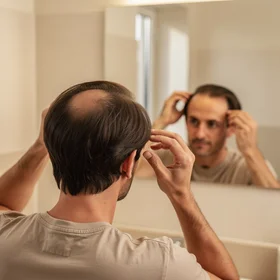
Natural DHT management is the right starting point for most men with early-stage recession. But it's not the right endpoint for everyone. If after 12 months of consistent use you're still seeing progression, it's time to have a conversation about prescription options.
The good news: starting with natural management means you've already been addressing DHT for a year. You haven't lost that time. You've been slowing the process while you evaluate. That's dramatically better than having done nothing. For a complete comparison of all treatment options including prescription and surgical, see our treatment guide. And for the full science behind why DHT targets your hairline, see our mechanism overview.